
Specialised, Research-Led Heel Pain Clinic in Long Eaton
Reclaim your first steps and put stubborn heel pain behind you
If your first steps out of bed feel like you are “walking on a nail”, you are experiencing the classic symptoms of plantar fasciitis (more accurately called plantar fasciopathy). Heel pain can quickly hijack your mornings, making standing at work, walking your dog, or training for sport feel impossible. We combine advanced clinical technology—including shockwave, laser, acupuncture, and custom-moulded orthotics—with progressive rehabilitation to find and resolve the root mechanical cause of your pain.
Identifying the exact drivers of your physical discomfort
Heel pain is rarely random; it is usually a “perfect storm” of load, foot structure, and footwear choice. We help patients who are struggling with:

The Classic Pain Patterns
- Sharp Morning Steps: Intense pain on the inside or front of the heel during your first steps out of bed or after sitting.
- Post-Activity Flare-ups: Pain that temporarily eases as you warm up, only to return with a vengeance after longer walking or standing.
- Tissue Sensitivity: Localised tenderness when pressing the underside of the heel, often spreading through the arch.
- Compensatory Stiffness: Tightness through the arch, calf muscles, and Achilles tendon that forces you to alter your walk.
Contributing Mechanical Imbalances
- Limited Ankle Flexibility: Tight calf muscles that place continuous, excessive strain on the plantar fascia.
- Structural Arches: Over-pronation (arches that collapse and stay flat too long) or high arches that absorb shock poorly.
- Sudden Load Jumps: A rapid increase in your daily step count, running volume, hill work, or long standing shifts.
- Unsupportive Footwear: Wearing flat, unsupportive shoes or safety boots on hard warehouse, hospital, or retail floors.
Globally published experts, treating the root mechanical cause
Traditional heel treatments often involve endless passive rest, unvetted stretching, or generic insoles. However, plantar fasciitis is not actually a simple “inflammatory” issue; it is a degenerative, overuse overload process of the fascia and intrinsic foot muscles.
Peer-Reviewed Research Expertise
Our clinicians, Steve Bailey and Ethan Bailey, are recognised specialists in plantar fasciitis. They have conducted extensive research in this specific field, presented their findings at national and international clinical conferences, and published peer-reviewed papers on heel pain. Steve also regularly trains NHS and private healthcare providers across the UK in advanced diagnostic approaches.
Tissue Capacity Rebuilding
True recovery requires restoring your foot's ability to act like a spring. We don't just "chase the pain"; we build up the physical tolerance of your calf muscles, plantar fascia, and intrinsic foot muscles so they can handle your daily activity.
Smart Load Management
Total rest actually weakens your tissues and delays healing. We help you find your "safe loading zone", adjusting your current training, steps, and footwear so you can stay active while your foot recovers.
Combining evidence-based technologies for faster physical recovery
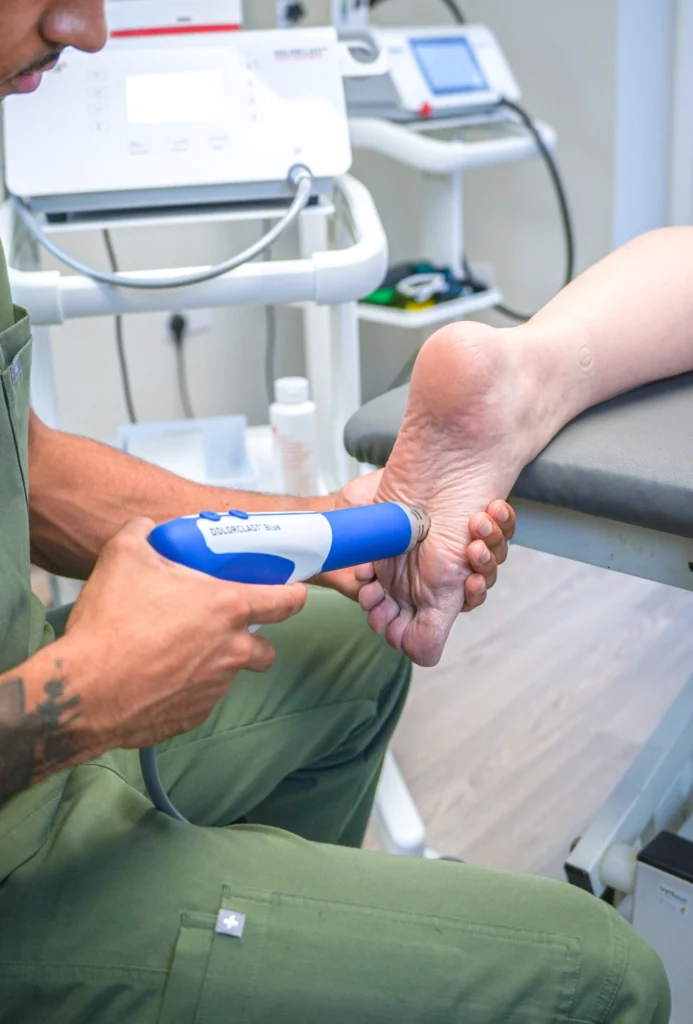
Shockwave Therapy (rESWT)
- Best For: Persistent heel pain lasting over 6 weeks.
- How it helps: Uses targeted acoustic waves to stimulate blood flow, trigger natural tissue repair processes, and temporarily desensitise overactive local pain nerves.
High-Powered Laser Therapy
- Best For: Highly irritable heel pain when immediate movement is limited.
- How it helps: A fast, non-invasive, and comfortable treatment that supports cellular tissue healing, relaxes local muscles, and reduces acute pain sensitivity.
Acupuncture & Dry Needling
- Best For: Easing deep calf tightness, calming the local nervous system, and reducing pain so you can progress with your rehabilitation comfortably.
- How it helps: Targets tight trigger points in the calf and foot muscles to instantly improve ankle range of motion.
Orthotics, Taping & Rehabilitation
- Best For: Rebuilding long-term tissue load tolerance and protecting the heel.
- How it helps: We pair targeted strengthening exercises with immediate physical relief—using professional taping techniques, chairside insoles, or bespoke 3D-moulded orthotics.
Preparing for your heel pain assessment
To ensure we get a precise diagnosis and begin your treatment journey safely, here is what to expect from your initial visit:
- Comprehensive Diagnostic Check: We will examine your foot posture, ankle flexibility, big toe function, and gait dynamics. We will also perform a differential diagnosis to confirm your pain is indeed plantar fasciitis, and not nerve irritation or a fat pad injury.
- Bring Your Footwear: Please bring along your most frequently worn shoes, including running shoes, work safety boots, and any insoles you currently wear.
- Appointment Duration: Your initial assessment and diagnostic consultation will take between 30 to 45 minutes, and if appropriate, we will begin your hands-on care or taping the very same day.
- Medical Questionnaire: Optionally download and print our medical history questionnaire to bring to your appointment to determine the effectiveness of any treatments we may use.
Frequently Asked Questions About Plantar Fasciitis
Is a "heel spur" the actual cause of my plantar fasciitis?
No, this is a very common myth. Many people have heel spurs on X-rays without ever experiencing a single day of pain. The spur is simply a bone adaptation to chronic tension; the pain itself is caused by the overload, microscopic tearing, and sensitivity in the soft tissue fascia and muscles attached to the bone. We focus on healing the tissue, not removing the spur.
Do I need to rest completely to recover?
Generally, no. Total bed rest or wearing a protective boot actually reduces your foot’s strength and overall capacity, making it much more likely to flare up again when you try to return to normal life. We practice “smart load reduction”—keeping you moving on comfortable, cushioned shoes while staying within your foot’s safe healing limit.
How many shockwave treatments will I need for my heel pain?
For stubborn, longstanding cases, a typical course of Shockwave Therapy involves between 4 to 8 sessions, spaced approximately one week apart. Shockwave works best when combined with footwear adjustments and progressive strengthening exercises, with most patients reporting a meaningful improvement in their symptoms within 3 to 4 weeks.
Ready to take your first pain-free step?
Putting off an assessment often means letting a highly treatable heel strain develop into a chronic, debilitating issue that forces you to alter your stride. Whether you want to cycle, train for a sport, stand comfortably at work, or simply enjoy a morning walk with your family, our specialists are ready to help you move with complete confidence.