
Specialised Big Toe Joint & Biomechanical Care in Long Eaton
Overcome Big Toe Stiffness and Walk Without Sharp Propulsion Pain
Your big toe joint (first metatarsophalangeal joint) plays a crucial role in your stride—it must bend smoothly upwards to push your body weight forward with every step. When this joint becomes restricted (Hallux Limitus) or locked solid by arthritic changes (Hallux Rigidus), pushing off the ground becomes painful. Patients often alter their stride to avoid bending the toe, causing secondary strain across the outer foot, knee, or lower back. At our Long Eaton clinic, we specialise in protecting stiff big toe joints, taking away propulsion stress, and keeping you walking comfortably.
Recognising The Signs Of Big Toe Joint Limitation
Big toe stiffness usually develops gradually following past injuries or subtle mechanical stress. As the joint loses its natural range of motion, your body adapts by changing how your foot hits the ground. During your consultation, we evaluate:
- Sharp Propulsion Pain: Easing deep, stabbing pain inside the joint when pushing off during walking, running, or climbing stairs.
- Restricted Upward Bending: Assessing limited joint movement that prevents your toe from flexing comfortably as your heel leaves the ground.
- Top-of-Joint Bony Spurs: Managing tender bony lumps (dorsal exostosis) on top of the joint that rub painfully against the uppers of your shoes.
- Outer-Edge Foot Walking: Correcting compensatory stride habits where you roll onto the outer border of your foot to bypass the stiff big toe.
- End-of-Day Joint Throbbing: Calming deep, aching inflammation inside the joint after long periods of standing or active walking.
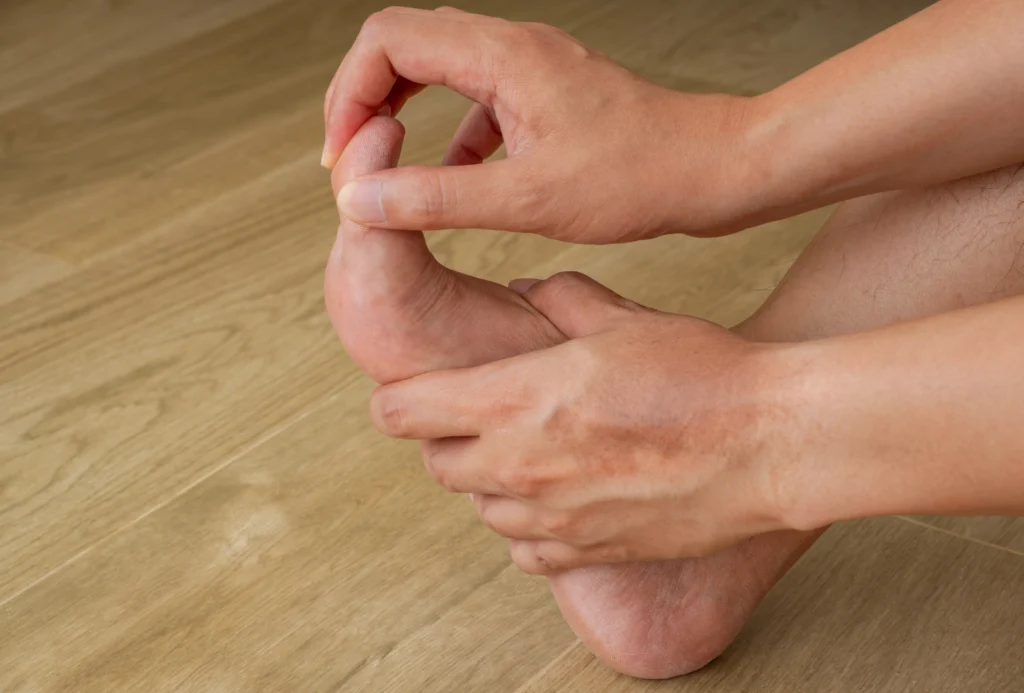
Unloading Stiff Joint Surfaces To Preserve Movement
Whether your joint stiffness is driven by an abnormally long first metatarsal bone, a past stubbing injury, or early osteoarthritis, forcing a stiff joint to bend repeatedly causes friction and bone-on-bone compression.
Pressure & Rollover Analysis
We use clinical gait screening to measure how much weight passes through your forefoot and identify how your stride compensates for joint rigidity.
Custom Rocker-Profile Orthotics
We engineer custom 3D orthotics featuring stiffened sub-structures or Morton's extensions that guide your foot smoothly over the ground without forcing the toe joint to flex.
Joint Mobilisation & Laser Therapy
We use gentle clinical mobilisation and high-powered laser therapy to reduce surrounding soft-tissue swelling, calm capsule inflammation, and preserve available joint space.
Practical Solutions That Keep You Moving Pain-Free
Living with a stiff or arthritic big toe does not mean you have to accept constant pain or give up your favourite walking routes. By altering the mechanical environment around the joint, we can eliminate the harsh bending forces that trigger your symptoms.
Guiding your foot smoothly through your stride takes the work away from a stiff big toe joint and prevents ongoing arthritic wear.
We focus on practical, real-world solutions. Beside custom insoles, we advise you on selecting shoes with supportive soles and mild forefoot rockers, fitting protective gel sleeves for top-of-toe bony bumps, and performing gentle joint-gliding exercises to maintain your joint health.
Preparing For Your Big Toe Assessment
We aim to make your visit clear, informative, and completely tailored to restoring your walking comfort. Here is what to expect:
- Comprehensive Joint Examination: We will measure your big toe joint flexibility, assess your standing alignment, and analyze your propulsion mechanics.
- What To Bring: Please bring 2 or 3 pairs of your regular shoes (such as work footwear, daily walking shoes, or trainers) so we can evaluate their sole flexibility and wear patterns.
- Appointment Duration: Your assessment and initial consultation takes approximately 30 to 45 minutes.
- Medical Questionnaire: You can download, print, and complete our medical questionnaire at home prior to your visit to streamline your arrival.
Frequently Asked Questions About Hallux Limitus
What is the difference between Hallux Limitus and Hallux Rigidus?
Hallux Limitus means the big toe joint has restricted, painful upward movement but retains some flexibility. Hallux Rigidus is the advanced stage where severe cartilage wear or bony spurs lead to near-total joint rigidity.
Can orthotics really help me avoid big toe joint surgery?
Yes, very often. By designing custom orthotics that guide your foot over the ground without forcing the big toe joint to bend, we take away the painful mechanical friction, allowing many patients to avoid joint fusion surgery.
What type of shoes should I wear if my big toe is stiff?
You should look for shoes with firm, unbendable soles or built-in forefoot “rockers” (where the sole gently curves upward at the toes). Avoid highly flexible, thin-soled plimsolls that force the big toe joint to bend fully with every step.
Ready to Walk Smoothly Without Big Toe Pain?
Ignoring a stiff big toe joint often forces your body to adopt unnatural walking habits that strain your ankles, knees, and lower back. Whether you want to enjoy daily walks, stay active at work, or prevent further joint wear, our Long Eaton team is here to help.