Fungal Nail Treatment in Long Eaton

Clearanail • Specialist Fenestration/Needling • Topical Plans • Nail Surgery

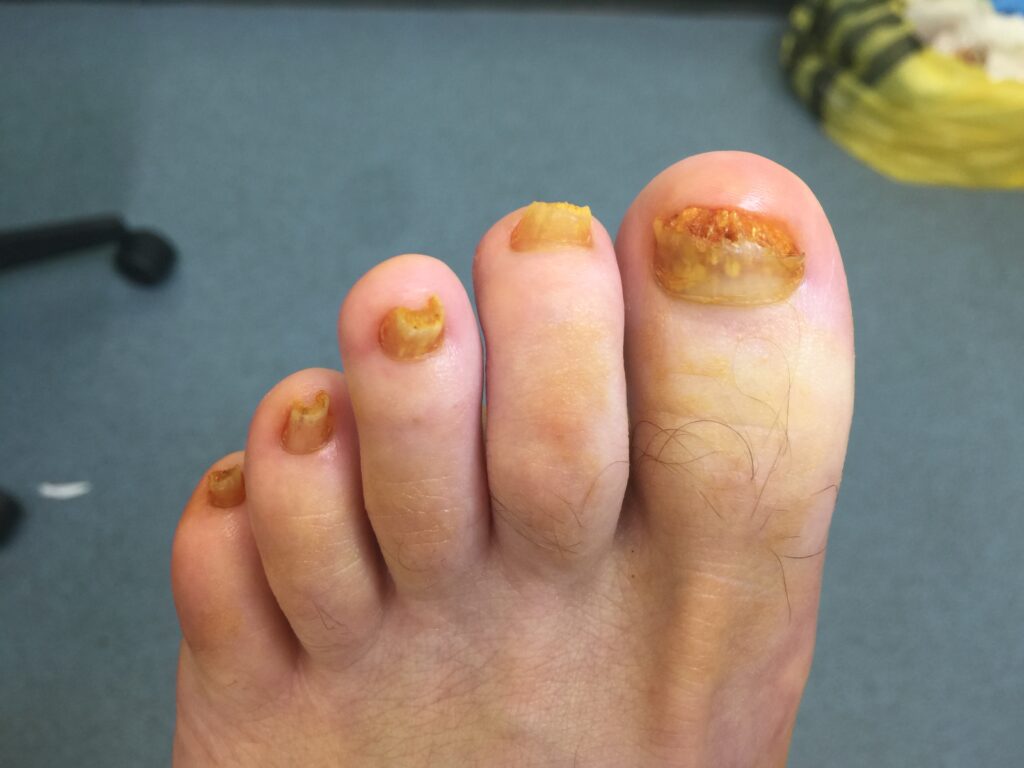
If your toenails are thick, yellow, crumbly, lifting, or difficult to cut, fungal nail infection (onychomycosis) may be the cause. At the Foot, Knee and Back Clinic in Long Eaton, our podiatry team offers a full range of fungal nail treatment options, from advanced micro-penetration (Clearanail) to specialist needling/fenestration techniques, targeted topical programmes, and nail surgery when needed.

Book online or call 0115 972 1111 to arrange your assessment.

Common Signs of Fungal Toenails (Onychomycosis)

You may have a fungal nail infection if you notice:

  • Yellow, white, or brown nail discolouration
  • Thickened, misshapen nails
  • Crumbling edges or debris under the nail
  • Nail lifting away from the nail bed
  • Recurrent athlete’s foot (often linked)
  • Discomfort in shoes due to thick nails

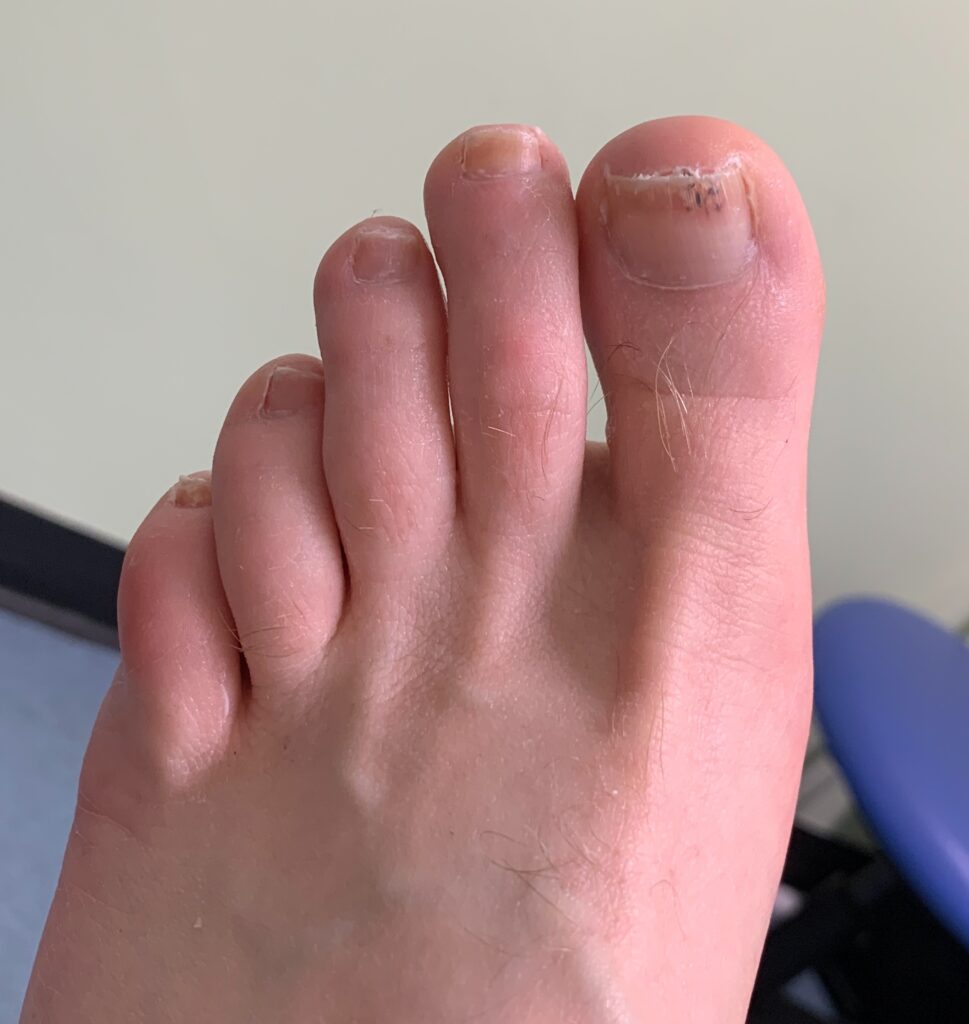
Not every thick or discoloured nail is fungal; trauma (running/walking/steel toe caps), psoriasis, eczema and other nail conditions can look similar. That’s why accurate diagnosis matters.

Diagnosis: How We Confirm Fungal Nail Infection

At your first visit, we will:

  1. Take a medical history (including medications and health conditions)
  2. Examine the nail(s) and surrounding skin
  3. If appropriate, confirm the fungus using:
  • An in-clinic dermatophyte test (fungal nail test), and/or
  • Microscopy/culture (nail clippings sent to a laboratory)

This helps us choose the right plan and avoids wasting time treating the wrong problem.

Treatment Options We Offer

Every plan is tailored to: how many nails are involved, severity, nail thickness, your health history, and how quickly you want results.

Option 1: Topical Treatment Plan (Clinic-guided)

Best for: Mild to moderate infections, early changes, or as an add-on to Clearanail/fenestration.

Topicals can work well, but consistency is everything, and penetration is the challenge. We support you with:

  • Nail preparation (thinning/debridement) to improve penetration
  • A tailored product plan (prescription and/or pharmacy options depending on suitability)
  • Practical guidance to reduce reinfection risk (shoes/socks/skin)
Typical number of appointments:
  • Initial assessment and nail prep
  • Follow-ups every 6–10 weeks as needed for nail reduction, progress checks, and plan adjustments
How long do topical plans take?
  • Expect months, not weeks, because the infected nail must grow out.

Option 2: Clearanail (Controlled Micro Penetration) and Topical Treatment Pack

Best for: People who want a clinic-led programme that improves topical penetration through thick nails.

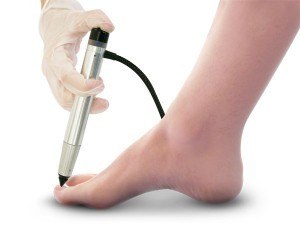
Clearanail creates computer-controlled micro-channels through the nail plate so that a topical antifungal can reach where it’s needed (the nail bed) without the nail acting as a barrier.

Typical number of appointments:
  • Visit 1 (Assessment and first treatment)
  • Week 8 review (top-up only if needed)
  • Week 16 review (end-of-path review and aftercare plan)
What happens at your Clearanail appointment?
  • Nail assessment and (if needed) testing
  • Nail reduction/thinning (debridement) to remove excess thickness
  • Clearanail micro-penetration treatment (generally very well tolerated)
  • Clear instructions on daily topical application and shoe hygiene
What results should you expect?
  • You may notice early changes as a healthier nail starts to grow
  • Full cosmetic improvement depends on nail growth (big toenails can take many months to fully grow out)
Pricing (Clearanail):
  • Clearanail treatment from £210 (includes a medical treatment pack)
  • If a top-up is needed: £45 per additional micro-penetration session

Option 3: Nail Surgery (Partial or Total Nail Removal)

Best for: Severe thickening, painful nails, repeated nail problems, or where removing part/all of the nail is the most practical option.

Nail surgery can be used for several nail conditions, and in selected cases, it can be helpful alongside fungal nail management, particularly when the nail is very deformed, repeatedly painful, or difficult to manage conservatively.

What nail surgery involves:
  • Removal of a small section of nail (partial) or the whole nail (total)
  • If appropriate, the nail bed can be treated to reduce regrowth using phenol (your podiatrist will discuss options with you)
Is it painful?
  • The procedure is performed under local anaesthesia.
  • The injection is briefly uncomfortable; the procedure itself is pain-free.
  • Any post-procedure discomfort is usually manageable with simple pain relief.
How many appointments are involved?
  • Day of procedure
  • Follow-up at 1–3 days for dressing removal/check/redress
  • Further reviews as required until healing is progressing well
Time off work:
  • Often advisable to take the day off after surgery (depending on your job and activity demands).

What to Expect When You Visit Our Clinic

Your first appointment typically includes:
  • A full nail and skin assessment
  • Discussion of your goals (cosmetic improvement, comfort, sport, recurrence prevention)
  • If appropriate, fungal testing
  • Nail debridement/thinning when needed
  • A clear treatment pathway and home-care plan

We’ll also explain how to reduce reinfection risk, including:

  • Treating athlete’s foot if present
  • Shoe hygiene and sock changes
  • Nail care habits that prevent recurrence


Realistic Timelines: When Will My Nail Look Normal Again?

Fungal nail improvement is a growth process:

  • Treatments reduce fungal load and help healthier nails grow
  • Toenails grow slowly, especially big toenails, so visible improvement takes time
  • Most plans require ongoing home care (particularly topical use) for best results

Book Fungal Nail Treatment in Long Eaton

Long Eaton Foot, Knee and Back Clinic
76 Derby Road, Long Eaton, NG10 4LB
Tel: 0115 972 1111
Online Booking Available

If you’re unsure whether your nail is fungal, book an assessment. Getting the diagnosis right is the fastest route to the right treatment.

FAQs

Do I definitely have a fungal nail infection?

Not always. Thick or discoloured nails can be caused by trauma or skin conditions. We can confirm with in-clinic testing and/or lab analysis.

How many Clearanail treatments will I need?

Most patients follow a 16-week path: first visit, week 8 review (top-up only if needed), and week 16 review.

Does Clearanail hurt?

Most people find it very tolerable. The process is designed to avoid damaging the skin beneath the nail.

Can you treat multiple nails?

Yes. We’ll assess how many nails are affected and recommend the most cost-effective plan.

Can I just use a topical treatment?

Sometimes, yes, especially in early or mild cases. Thick nails often respond better when we reduce thickness and/or use micro-channel techniques to improve penetration.

When is nail surgery recommended?

When nails are repeatedly painful, severely deformed/thickened, or when removing part/all of the nail is the most practical option.

Can fungal nails come back?

Yes, particularly if athlete’s foot or contaminated footwear isn’t addressed. We’ll give you a prevention plan.

Do you treat people with diabetes or circulation issues?

Yes, but treatment choice must be tailored carefully. Please tell us about any medical conditions at booking.